
Prestige Casino Payments – Deposits, Withdrawals, and the 2026 Landscape
 Available in GB

Payments are where casinos differentiate operationally – and where most player frustrations originate. This hub covers how the payments architecture works at Prestige Casino, how the 2026 UK payment landscape is shaping operator behaviour, and the structural questions that determine whether a payment flow will work as expected.
How Deposits Work at Prestige Casino
The standard deposit flow at Prestige Casino – as at most modern platforms – runs: cashier → method selection → amount → in-flow verification (3D Secure for cards, redirect for e-wallets, wallet-address scan for crypto) → confirmation. Deposit method availability changes with payment-processor relationships, which can churn quickly at offshore platforms. Independent reviews describe card deposits, e-wallets, prepaid vouchers, and a selection of cryptocurrency options as available; specific availability depends on the player’s region and operator’s current routing.

Third-party reviews report €20 minimum qualifying deposits for the welcome-package tiers. Deposits settle effectively instantly into the player balance once the in-flow verification completes.
The honest framing: deposit availability at offshore platforms is best verified at the cashier at the moment of deposit, because third-party summaries update slower than payment-processor configurations change.
How Withdrawals Work and Why KYC Matters
Withdrawals at Prestige Casino – per third-party reviews – process in 2–4 days from request to settlement once KYC is complete. The withdrawal flow runs: cashier → method selection (typically closed-loop, paying back to the deposit method first) → amount → operator review → payment-processor settlement.
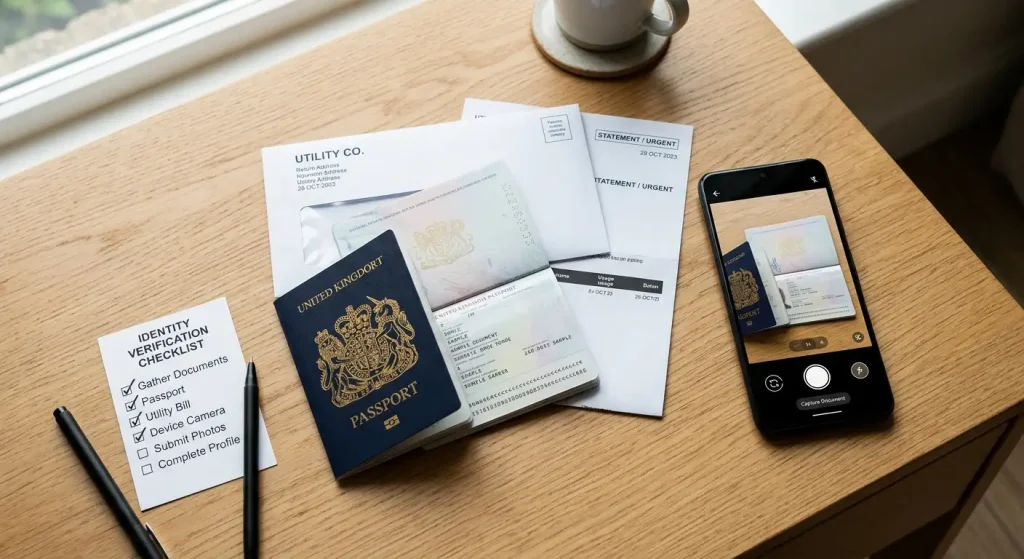
KYC verification is enforced more strictly at withdrawal than at deposit. Typical document requirements: government photo ID, proof of address (utility bill or bank statement within the last three months), and proof of payment method (a masked card image or e-wallet screenshot). The audit-quality advice is to complete KYC before depositing significant sums.
The minimum withdrawal threshold at Prestige Casino is reported at £100. Maximum withdrawal limits (per day, per week, per month) are operator-set and should be verified in the terms-and-conditions document – particularly for any meaningful win, where the limit structure can convert a single payout into a multi-instalment process.
Cryptocurrency at Prestige Casino
Cryptocurrency is a significant part of the offshore payments mix. Bitcoin still dominates crypto-casino volume – recent industry analyses put it at roughly 66% of crypto gambling traffic – followed by Ethereum, Litecoin, and stablecoins (USDT, USDC). Stablecoins are the fastest-growing category because they eliminate the price-volatility risk that historically deterred casual players from crypto gambling.
The practical implications at Prestige Casino: faster settlement (minutes for most chains), lower per-transaction friction than cards, and no chargeback option if the operator fails to honour a withdrawal. Crypto deposits trade speed for recourse – which is the central trade-off of crypto payments generally.

Volatility-side, a £500 deposit in Bitcoin can become £450 or £550 in balance terms by the next session, before any play. Stablecoin deposits eliminate this. Crypto is now mainstream in the offshore space – it is no longer a fringe indicator of operator quality, in either direction.
Deposit Mechanics: Wallet Addresses, Confirmations, and Irreversibility
The deposit process for cryptocurrency follows a standard pattern across the industry. From the cashier, you select crypto as your payment method and choose your specific coin. The platform generates a unique wallet address – a long string of characters that serves as the destination for your transfer. You then send the desired amount from your personal crypto wallet to this address. The deposit is credited to your casino account once the transaction receives sufficient confirmations on the blockchain.
Confirmation times vary by currency. Bitcoin transactions typically require two to six confirmations, which can take 20 minutes to an hour under normal network conditions. During periods of high blockchain congestion, delays can extend to several hours. Litecoin and other faster-settlement currencies process more quickly. The casino has no control over blockchain speed – this is a network-level variable.
A critical detail for new crypto depositors: cryptocurrency transactions are irreversible. If you send funds to the wrong address, or if you send the wrong type of coin to a wallet address designed for a different currency, those funds are permanently lost. There is no chargeback mechanism, no bank to call, no dispute process. Double-check the wallet address and the currency type before confirming any transaction. Copy and paste addresses rather than typing them manually – a single character error sends the money into the void.
Withdrawal Speed, Network Fees, and UK Player Risks
The blockchain-vs-operator distinction matters more than most crypto-casino guides acknowledge. The blockchain processing step is fast, but the casino’s internal approval process still applies in full. A withdrawal request goes through the same pending period, KYC verification, and manual review stages as a fiat withdrawal. The blockchain component only begins after the operator releases the payment. A crypto withdrawal with a 48-hour operator-side pending period and a 20-minute blockchain transfer is still a 48-hour withdrawal from the player’s perspective.
On fees, the picture is mixed. The casino may not charge a fee for crypto withdrawals – many operators absorb the transaction cost as a competitive differentiator. Blockchain network fees apply regardless. Bitcoin network fees fluctuate based on congestion and can range from under £1 during quiet periods to £10 or more during busy ones. These fees are deducted from the transaction itself, reducing the amount that arrives in your wallet. Currency conversion adds another layer of cost: a GBP-denominated casino account withdrawing in Bitcoin involves an implicit conversion at the platform’s exchange rate, which may include a spread above the market rate.
For UK players specifically, three structural risks compound. First, regulatory protection: UKGC-licensed operators are required to segregate player funds, participate in dispute resolution schemes, contribute to the statutory levy, and comply with the safer-gambling framework. Offshore crypto casinos operating under Tobique or Curaçao licences are not bound by those obligations, and the recourse available in a contested withdrawal is limited to whatever the licensing jurisdiction provides. Second, tax treatment: gambling winnings are not taxed in the UK for recreational players, but the tax treatment of cryptocurrency gains is a separate matter – appreciation of a crypto balance held in (or moved through) a casino account may interact with HMRC capital-gains reporting requirements, which is a grey area worth professional advice if you are dealing with significant amounts. Third, volatility risk: a £500 Bitcoin deposit can become £450 or £550 in fiat terms before you have placed a single bet, adding market risk on top of gambling risk.
The 2026 UK Payment Landscape
Three shifts shape how deposits work in 2026. First, the UKGC’s broader compliance load has tightened deposit processes at regulated sites – including source-of-funds checks above the assessment trigger set at £150 in net deposits within a rolling 30-day window. Second, UK bank policy for gambling-related transactions varies – credit-card gambling deposits have been banned at UKGC-licensed sites since 2020, debit-card transactions are sometimes flagged for additional verification, and a minority of issuers decline gambling-related cards to offshore destinations.
Third, open banking has become the default settlement layer for many gambling deposits. Account-to-account rails reduce transaction costs, lower fraud risk, and improve approval rates compared with card-based flows – a direction increasingly adopted by both regulated and offshore platforms.

The Remote Gaming Duty rise from 21% to 40% from 1 April 2026 (Autumn Budget 2025; Finance Bill 2025-26) reshapes operator economics. Operators commonly respond by tightening promotional generosity and adjusting payment-method routing. UKGC sites face direct cost pressure; offshore sites face indirect competitive pressure.
Structural Questions Before Depositing Anywhere
Five questions surface most of the avoidable problems. First: does the platform display a verifiable licence in the footer (and does that licence number actually validate on the regulator’s site)? Second: is the deposit method you plan to use the same one you intend to withdraw to? Most platforms enforce closed-loop withdrawal. Third: what is the operator’s stated withdrawal processing window, and what is the documented experience among independent reviewers? Fourth: is the minimum withdrawal threshold compatible with your expected balance? Fifth: does the terms-and-conditions document include closure clauses you can live with, including any maximum-withdrawal-per-period limits or dormant-account fees?

These are not ‘is this casino safe?’ questions. They are ‘will my deposit and withdrawal flow work as I expect?’ questions, which is the operationally useful framing.
Comparison With UKGC-Licensed Payment Standards
At UKGC-licensed sites, the payment framework operates within a thicker compliance envelope. Fewer than 3% of active accounts at UKGC-licensed sites trigger a Financial Risk Assessment, and 97% of those complete the check frictionlessly via open-banking or credit-reference data (UKGC Director of Policy Ian Angus, Clarion Payments Providers Summit, May 2026); the assessment trigger sits at £150 in net deposits within a rolling 30-day window. Credit-card gambling is banned. Source-of-funds checks above certain thresholds are mandatory. GamStop integration prevents deposits from self-excluded players automatically.

At Prestige Casino, none of those checks apply. The trade-off is the standard one: looser payment terms in exchange for absence of the consumer-protection framework. UK players should make that trade-off knowingly rather than incidentally.
How long do withdrawals take at Prestige Casino?
Third-party reviews describe 2–4 day processing windows after KYC is complete. E-wallets and cryptocurrency settle faster than bank transfers.
What is the minimum deposit and withdrawal?
Third-party reviews report €20 minimum qualifying deposits for the welcome-package tiers, and £100 minimum withdrawals. Confirm at the cashier at the moment of relevance.
Can I deposit by UK credit card at Prestige Casino?
UKGC rules have banned credit-card gambling deposits at UKGC-licensed sites since 2020. Offshore platforms are not bound by that ban, but UK card issuers vary widely in whether they permit gambling-related credit-card transactions to offshore destinations.
Are cryptocurrency deposits safe at Prestige Casino?
Cryptocurrency deposits settle faster and at lower friction than card payments but offer no chargeback recourse if the operator fails to honour a withdrawal. Stablecoins (USDT, USDC) eliminate price-volatility risk during play.
What payment methods are available?
Independent reviews describe cards, e-wallets, prepaid vouchers, and cryptocurrency as commonly available. Specific provider availability and limits depend on the player"s region and the operator"s current routing configuration – verify at the cashier.
Is crypto gambling legal for UK players?
Gambling with cryptocurrency is not specifically prohibited for UK players, but the regulatory situation is layered. UKGC-licensed operators are required to use only regulated payment channels – which in practice excludes consumer-side cryptocurrency deposits. Offshore operators accepting crypto are not UKGC-licensed, which means UK players using these platforms fall outside UK consumer-protection requirements including fund segregation, dispute resolution, and responsible-gambling tool integration.
Are crypto deposits at Prestige Casino subject to wagering requirements?
Deposits made via cryptocurrency at Prestige Casino are treated the same as fiat deposits for bonus eligibility and wagering. If you claim a bonus on a crypto deposit, the same wagering multiplier, game-contribution rates, and time limits apply as for a card or e-wallet deposit. Check the specific bonus terms to confirm there are no crypto-specific exclusions or conditions.
Articles
Prepared by the Prestige Casino editorial staff.