Prestige Casino and UK Gambling Regulation in 2026 – What Has Changed
 Available in GB

UK gambling regulation has changed more in the last two years than in the previous decade. This hub covers the Gambling Act White Paper reforms, the statutory levy and Remote Gaming Duty changes, and how the framework relates to Prestige Casino as an offshore platform that UK players access.
The 2025–2026 Regulatory Reforms in Brief
The post-White Paper reform package landed across 2025 and 2026 in five major instruments. First, £5 maximum stake per online-slot spin for adults 25+ (live since 9 April 2025) and £2 for 18–24-year-olds (live since 21 May 2025), introduced by the Gambling Act 2005 (Operating Licence Conditions) (Amendment) Regulations 2025. Second, fewer than 3% of active accounts at UKGC-licensed sites trigger a Financial Risk Assessment, and 97% of those complete the check frictionlessly via open-banking or credit-reference data (UKGC Director of Policy Ian Angus, Clarion Payments Providers Summit, May 2026), with the assessment trigger set at £150 in net deposits within a rolling 30-day window. Third, a 1.1% statutory levy on online operators’ Gross Gambling Yield (the levy is tiered: 0.1%–1.1% by licence type), with proceeds split 50% NHS-led treatment, 30% prevention, 20% research (Gambling Levy Regulations 2025). Fourth, Remote Gaming Duty rises from 21% to 40% from 1 April 2026 (Autumn Budget 2025; Finance Bill 2025-26). Fifth, autoplay and turbo-spin features are banned, and a 2.5-second minimum spin interval applies (UKGC Remote Technical Standard 14D).
Together, these instruments form a coherent policy direction: tighter constraints on the design of online gambling products, financial triggers to flag potentially harmful play, and significantly higher tax pressure intended to disincentivise the most harm-associated verticals (online slots and casino).

A new 25% Remote Betting Duty within General Betting Duty follows from 1 April 2027 (excluding UK horse-racing, which stays at 15%). Bingo Duty is abolished from the same date.
The Affordability Framework
Financial Risk Assessments are the framework’s most contested instrument. Fewer than 3% of active accounts at UKGC-licensed sites trigger a Financial Risk Assessment, and 97% of those complete the check frictionlessly via open-banking or credit-reference data (UKGC Director of Policy Ian Angus, Clarion Payments Providers Summit, May 2026). Of the 3% who trigger checks, the additional 0.1% who cannot complete the check frictionlessly face enhanced due diligence – potentially document requests and account restrictions.
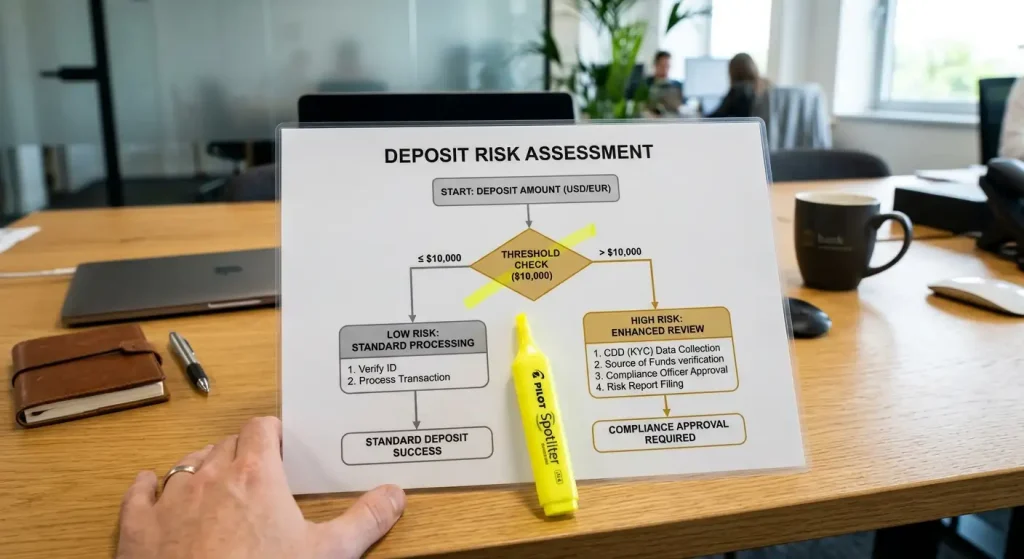
The structural design point is that the framework is supposed to catch financial-vulnerability signals (recent county-court judgments, insolvency markers, sustained spending above realistic income levels) rather than to police absolute spending. This is why it is called a ‘risk assessment’ rather than a ‘spending cap’ – and why the UKGC’s preferred terminology is FRA rather than ‘affordability check’.
Critics argue the framework drives players offshore, reducing UK consumer protection while not reducing total UK gambling activity. Supporters argue the framework’s automated, low-friction design means it has minimal impact on most players while flagging the small minority where intervention is warranted. The evidence on offshore migration is unclear; the evidence on harm-prevention impact is too early to assess.
Statutory Levy and Remote Gaming Duty
The statutory levy commenced on 6 April 2025 under the Gambling Levy Regulations 2025. A 1.1% statutory levy on online operators’ Gross Gambling Yield applies (the levy is tiered: 0.1%–1.1% by licence type), with proceeds split 50% NHS-led treatment, 30% prevention, 20% research (Gambling Levy Regulations 2025). Land-based casino and betting operators pay 0.5%; AGCs, on-course bookmakers, and bingo premises pay 0.2%; lotteries and ELMs pay 0.1%.

Allocation of levy funds: 50% to NHS England (and equivalent bodies in Scotland and Wales) for treatment services; 30% to prevention strategies; 20% to research via UK Research and Innovation. The levy is expected to raise £90–100 million per year – roughly double the previous voluntary-contribution model.
The Remote Gaming Duty rise from 21% to 40% from 1 April 2026 (Autumn Budget 2025; Finance Bill 2025-26) sits on top of the levy. The Treasury’s published expectation is that operators will pass up to 90% of the duty cost to consumers via tightened promotional terms. Across 2026, this has shown up as lower match percentages, higher wagering multipliers, and shorter clearance windows at UKGC-licensed sites.
GamStop and Self-Exclusion
Around 1% of the UK adult population – approximately 562,000 people at the end of 2025 – were registered with GamStop. Independent Ipsos research published in September 2024 found that 75% of GamStop users no longer gamble online after registering, and 78% reported that GamStop delivered the results they hoped for. Across all users, 47% select the maximum five-year exclusion period; since launch in 2018, 53% of registrations have been five-year.

Gamstop Online recorded a 40% year-on-year rise in 16–24 self-exclusions in H2 2025, with that age group making up 29% of new sign-ups. The 16–24 surge is the single most-notable recent trend in UK gambling-harm indicators; the policy implications are still being worked out.
GamStop is integrated automatically across all UKGC-licensed operators – a single registration covers hundreds of platforms. The structural protection this provides is what makes GamStop effective, and what makes its absence at offshore platforms – including Prestige Casino – structurally significant.
Where Prestige Casino Sits in This Framework
Prestige Casino does not hold a UKGC licence. None of the UKGC regulatory instruments – stake limits, FRA, statutory levy, RGD, GamStop integration – apply at the platform. The casino operates under a Tobique Gaming Commission licence whose own rules require licensees to geo-block UK customers.

The practical position for UK players: playing at Prestige Casino is playing outside the UK consumer-protection framework. Deposits do not contribute to the statutory levy that funds NHS gambling-harm treatment. GamStop registration does not block access. Affordability checks do not trigger. The UKGC has no jurisdiction over disputes.
This is not a moral judgement – many UK players choose offshore platforms knowingly, and the trade-off is legitimate to make. It is a structural fact: the protections UK players are increasingly used to assuming are tied to the UKGC framework, and stepping outside that framework removes them.
The Wider Direction of UK Gambling Policy
The policy direction across the next several years is signalled by a few visible workstreams. The Gambling Commission’s Single Customer View / GamProtect work continues to expand. Financial Risk Assessments are expected to be finalised after a delayed Commission board decision. Enforcement against illegal offshore gambling is funded by an additional £26 million in Treasury allocation across three years. Land-based gambling impact assessments are being introduced via the English Devolution and Community Empowerment Bill.

For market context on the regulated side: UK Remote Casino, Betting and Bingo GGY reached £7.8 billion in the 2024-25 financial year, a 13.1% increase on 2023-24 (UKGC Industry Statistics, November 2025). The UK market continues to grow at the headline level – the question for the next reform cycle is whether the harm-reduction tools shipped across 2025–2026 actually reduce harm at the population level, and what the next instruments will look like if they do not.
Does UK gambling regulation apply at Prestige Casino?
No. Prestige Casino does not hold a UKGC licence. The stake limits, Financial Risk Assessments, statutory levy, Remote Gaming Duty, and GamStop integration are all licence conditions that apply to UKGC operators only.
When did the £5 and £2 stake limits take effect?
The £5 limit for adults 25+ went live on 9 April 2025; the £2 limit for 18–24-year-olds followed on 21 May 2025.
What is the new Remote Gaming Duty rate?
Remote Gaming Duty rose from 21% to 40% on 1 April 2026 (Autumn Budget 2025; Finance Bill 2025-26). The Treasury expects operators to pass up to 90% of the duty cost on to consumers.
How much is the statutory gambling levy?
Online operators pay 1.1% of Gross Gambling Yield; the broader scale runs 0.1%–1.1% by licence type. Funds are allocated 50% to NHS-led treatment, 30% to prevention, 20% to research.
Does GamStop block Prestige Casino?
No. GamStop covers UKGC-licensed sites only. A GamStop registration does not block access to Prestige Casino, and registering at Prestige does not give you GamStop coverage.
Articles
Created by the "Prestige Casino" editorial team.