
Prestige Casino Wagering Requirements Explained – The Real Cost
 Available in GB

Every bonus in online gambling has a price tag, and that price tag is the wagering requirement. In nine years of analysing casino promotions, I have watched this single number determine whether a bonus is genuinely generous, mathematically neutral, or an outright trap. The problem is that most players see “35x wagering” and have no framework for translating that multiplier into pounds and pence. This article fixes that.
Prestige Casino’s wagering requirements sit at the centre of every bonus offer the platform runs. Understanding what these numbers actually mean – not in abstract terms, but in hard currency – is the most valuable skill you can develop as a casino player. It is the difference between playing with informed expectations and playing blind.
What Wagering Requirements Actually Mean
I once explained wagering requirements to a friend using a pub analogy, and it clicked immediately. Imagine a pub offers you a “free” £10 bar tab, but you have to buy 30 drinks before you can use it. By the time you have bought 30 drinks, you have spent far more than the tab is worth. That is wagering in a nutshell: the bonus is conditional on you cycling money through the system a specified number of times.
A wagering requirement of 30x means you must place bets totalling 30 times the bonus amount before any bonus funds or winnings derived from them become withdrawable. The industry standard for fair wagering sits between 20x and 30x. Requirements above 35x are considered high. Below 20x is rare and unusually generous.

The critical nuance is what the multiplier applies to. “30x the bonus” and “30x the bonus plus deposit” are vastly different things. If you deposit £100 and receive a £100 bonus, 30x the bonus means wagering £3,000. But 30x the bonus plus deposit means wagering £6,000 – double the volume for the same bonus. Prestige Casino’s terms specify which model applies, and this distinction alone can make or break the value proposition.
Time limits add another constraint. Most wagering requirements must be completed within a defined window – typically 7, 14, or 30 days. If you do not clear the requirement within that period, both the bonus and any associated winnings are forfeited. This time pressure can push players into higher-stakes play than they would otherwise choose, which increases variance and risk. The comprehensive bonus guide covers time-management strategies for different wagering windows.
Step-by-Step Wagering Calculation
Let me walk through two concrete examples, because abstract percentages mean nothing without real numbers.
Example one: you deposit £50 and receive a 100% match bonus of £50. The wagering requirement is 30x the bonus amount. Total wagering needed: £50 multiplied by 30, which equals £1,500. You choose to play slots with an average RTP of 96%. For every £100 you wager, you can statistically expect to retain £96 – meaning the house takes £4 per £100. Over £1,500 in wagering, the expected cost is £1,500 multiplied by 0.04 (the house edge), which equals £60. Your £50 bonus has cost you £60 in expected losses to clear. The bonus is worth negative £10 in pure expected value.
Example two: same deposit and bonus, but the wagering requirement is 20x. Total wagering needed: £50 multiplied by 20, which equals £1,000. Expected cost: £1,000 multiplied by 0.04, which equals £40. Your £50 bonus has cost you £40 to clear, leaving you with a positive expected value of £10. Same bonus, lower wagering, fundamentally different outcome.
These calculations assume perfect play on standard-RTP slots. In practice, variance means individual results will deviate significantly from the mathematical expectation. You might clear the wagering with money to spare, or you might lose your entire balance halfway through. But the expected value calculation tells you whether the odds are fundamentally in your favour or against you, and that matters for decision-making even when individual outcomes are unpredictable.
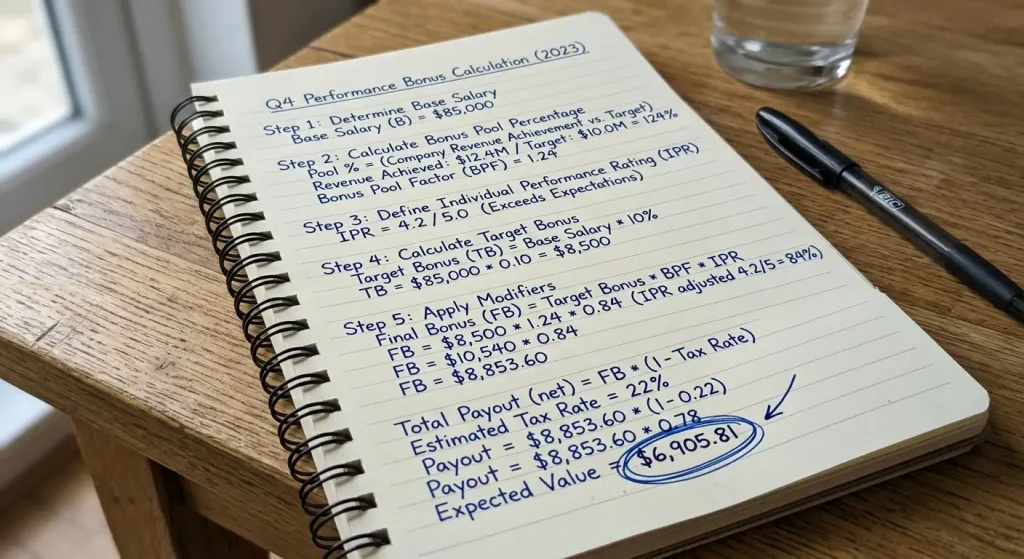
The formula is simple enough to run on any calculator: wagering amount equals bonus amount multiplied by the wagering multiplier. Expected cost equals wagering amount multiplied by the house edge (1 minus RTP). Net expected value equals bonus amount minus expected cost. If the result is positive, the bonus has positive expected value. If negative, you are statistically paying more to clear the bonus than the bonus is worth.
Game Contribution Rates to Wagering
Here is where the calculation gets more complex, because not all games contribute equally to clearing wagering requirements. The average RTP across EGBA members was 93.7% in 2024, but contribution rates are a separate mechanism entirely.
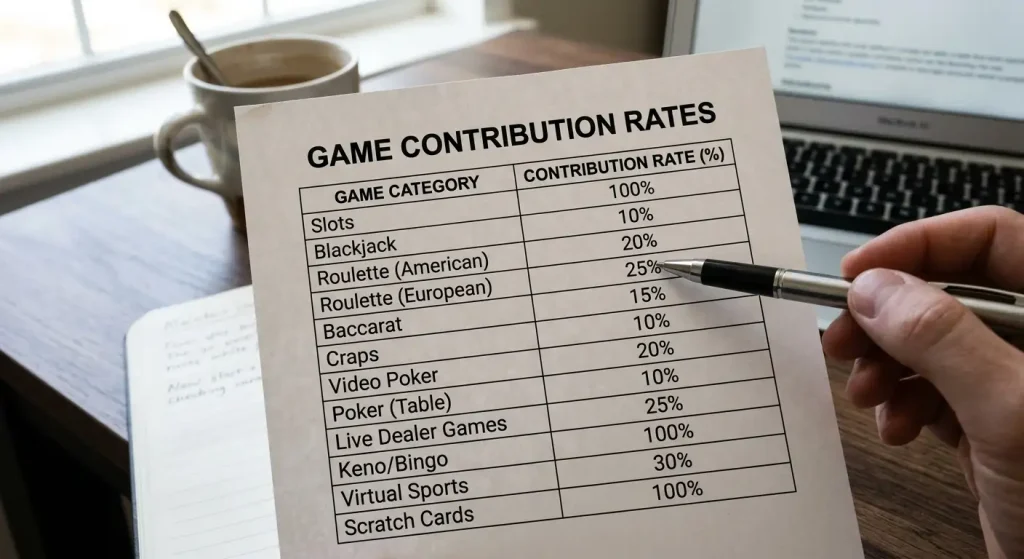
Most casinos, including Prestige Casino, weight game contributions differently by category. Slots typically contribute 100% – meaning every £1 wagered on slots counts as £1 toward your requirement. Table games like blackjack and roulette often contribute only 10% to 20%, meaning a £1 bet on blackjack might count as only £0.10 or £0.20 toward wagering. Live dealer games may contribute even less, and some games are excluded entirely.
This weighting exists because different games have different house edges. Blackjack with optimal strategy can have a house edge under 0.5%, meaning a player could theoretically clear wagering requirements at minimal cost. By reducing blackjack’s contribution rate, the operator ensures that the effective wagering volume – and therefore the expected cost to the player – remains consistent regardless of game choice.
The practical impact is significant. If you prefer table games and the contribution rate is 10%, a 30x wagering requirement effectively becomes a 300x requirement in terms of how much you need to bet at the table. A £50 bonus with 30x wagering at 100% slot contribution requires £1,500 in bets. The same bonus at 10% blackjack contribution requires £15,000 in bets. That is not a typo. The game you choose can multiply the effective wagering requirement by a factor of ten.
Check Prestige Casino’s specific contribution rates before committing to any bonus. They are typically listed in the bonus terms or the general terms and conditions. If your preferred games contribute less than 100%, recalculate the expected cost using the adjusted wagering volume. In many cases, the bonus becomes uneconomical for non-slot players.
Prestige Casino vs Industry-Standard Wagering
David Carrion, formerly Marketing Director at PokerStars and now Chief Strategy Officer at Gaming1, has observed a marked increase in the adoption of safer gambling tools across the industry. Part of that trend extends to bonus transparency – operators are under growing pressure from regulators and players alike to present wagering conditions clearly and to keep them within reasonable bounds.
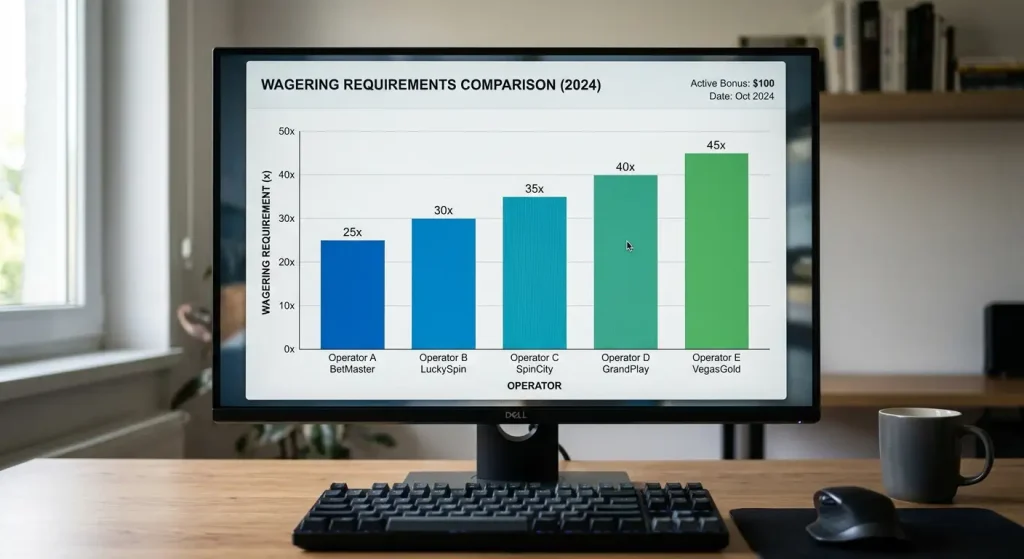
The 20x to 30x benchmark I reference throughout this article is not arbitrary. It reflects a consensus among industry analysts and player advocacy groups about the point at which wagering requirements are onerous enough to negate the bonus value for the average player. Prestige Casino’s specific multiplier needs to be evaluated against this benchmark, taking into account the contribution rates, time limits, and maximum bet restrictions that accompany it.
Maximum bet restrictions are a detail that often goes unnoticed. During wagering, most operators cap the maximum bet per spin or per hand – typically at £5 or less. Placing a bet above this limit while wagering is active can void the bonus entirely. This rule exists to prevent players from clearing wagering quickly through high-stakes bets, but it also means that the wagering process is forced into low-stakes territory, extending the time required and increasing the number of individual bets needed.

Across the broader European market, the trend is toward lower wagering requirements and greater transparency. Some operators have introduced “wager-free” spins or bonuses with no wagering attached at all, though these tend to have lower headline values. The trade-off between a large bonus with heavy wagering and a small bonus with no wagering is ultimately a personal decision based on your playing style, bankroll, and time horizon.
What is a fair wagering requirement for online casino bonuses?
The industry benchmark for fair wagering requirements is 20x to 30x the bonus amount. Requirements above 35x are considered high and significantly reduce the real-world value of the bonus. When evaluating any offer, calculate the expected cost of clearing the wagering requirement by multiplying the total wagering amount by the house edge of your chosen games. If the expected cost exceeds the bonus value, the bonus has negative expected value.
Do all games contribute equally to Prestige Casino wagering?
No. Prestige Casino, like most online casinos, applies different contribution rates to different game categories. Slots typically contribute 100%, while table games, live dealer games, and certain specialty games may contribute 10% to 20% or less. Some games may be excluded from wagering contributions entirely. These rates are specified in the bonus terms and directly affect how much you need to wager in total to clear the requirement.
Articles
Created by the "Prestige Casino" editorial team.